
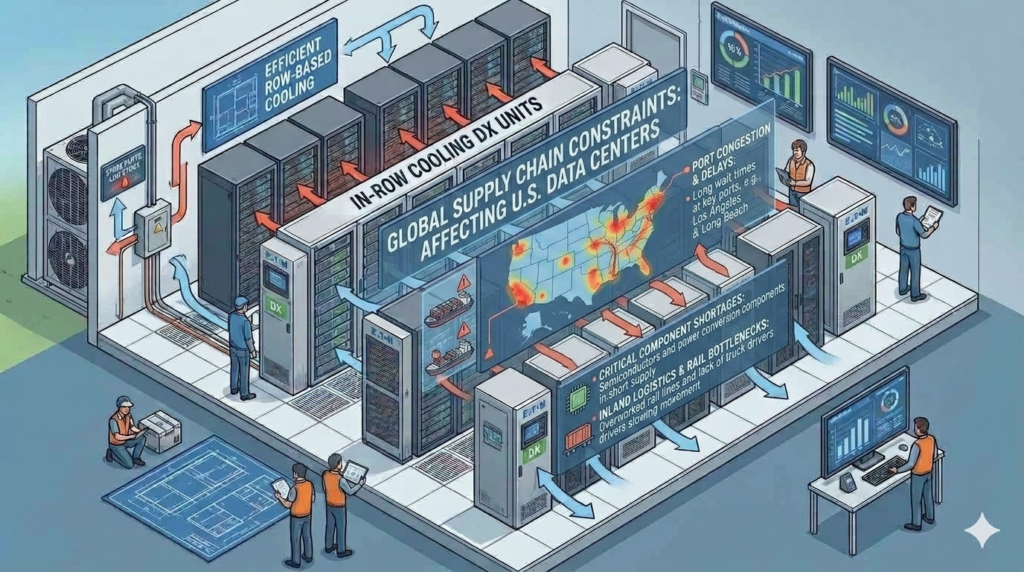
The EPA’s mandated HFC phasedown under the AIM Act is causing severe supply chain bottlenecks for data center cooling.
EMR CPR LLC, Global Data Center Solutions, Data center cooling projects across the industry are facing significant delays due to the EPA’s HFC phasedown under the AIM Act. The mandated reduction of high-Global Warming Potential (GWP) refrigerants, such as R-410A, is forcing manufacturers to transition to new A2L mildly flammable refrigerants like R-454B. This regulatory shift has created substantial supply chain constraints, component shortages, and extended production timelines for Computer Room Air Conditioning (CRAC) and other precision cooling systems.
Specifically, you can view the core environmental reasons and legislative backing on the EPA Background on HFCs and the AIM Act Page as well as the EPA Technology Transitions Program Page.
For more details on the specific timelines, sector-by-sector bans, and the rollout of eco-friendly alternatives (such as R-32 and R-454B), you can review the official EPA Technology Transitions HFC Restrictions by Sector Guide
Vertiv, one of the world’s largest manufacturers of data center cooling infrastructure, submitted formal petitions and public comments directly to the EPA regarding these rules. Vertiv explicitly stated that the EPA’s aggressive transition dates and GWP limits would “severely constrain the choice of refrigerants” used in Computer Room Air Conditioning (CRAC) applications and data centers. They warned that because local building codes and ordinances have not yet adapted to the new low-GWP alternatives, data center developers face severe installation bottlenecks, prompting Vertiv to petition the EPA to delay the mandatory low-GWP compliance timeline. See official document here.
Schneider Electric has extensively published compliance guidance for data center operators regarding the January 1, 2027 strict EPA compliance deadline. They note that because legacy workhorse refrigerants (like R-410A and R-407C) are banned in new equipment, data center teams must completely transition to new low-GWP machinery. They highlight that teams not proactively redesigning their supply chains around these new parameters face severe procurement vulnerabilities due to the rapid industry shift. Read more here.
AIRSYS, an international specialist in ICT and data center cooling, actively tracks and warns clients about the collision of the EPA’s Significant New Alternatives Policy (SNAP) regulations and the AIM Act. They explicitly point out that because legacy chillers and infrastructure are now restricted or completely prohibited, data center operators face a compressed window to deploy compliant equipment, straining manufacturing lines and complicating compliance. Read more here.
The CBRE North America Data Center Trends H2 2024 report indicates that while data center construction reached record highs, severe shortages of critical components—including chillers—significantly delayed project completions. These supply chain constraints, paired with massive demand, led to record-low vacancy rates and a 12.6% year-over-year increase in average asking lease rates. Read the full report at CBRE.
